FEMTO Engineering is an R&D center of the foundation FC Innov
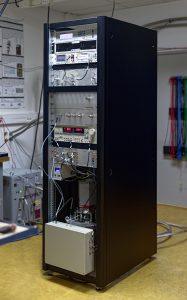
ULISS is an ultra-stable cryogenic oscillator developed to make transportable a technology previously reserved for a few highly equipped laboratories. It is equipped with a sapphire resonator cooled at very low temperature, which provides an exceptionally stable frequency reference for time-frequency applications, metrology, space, radio interferometry and advanced scientific instrumentation.
ULISS demonstrates that a cryogenic sapphire oscillator can go beyond the strict experimental framework to become a transportable, autonomous and usable frequency reference at different user sites.
The project made it possible to overcome an important obstacle: to maintain the performance of a cryogenic ultrastable oscillator while eliminating the dependence on liquid helium. This evolution makes the technology more practical for demanding industrial, scientific and spatial uses.
In practice, ULISS provides a very high stability frequency reference to compare, qualify or improve other systems. It can be used in particular to measure the stability of high-performance oscillators with a resolution that is difficult to achieve by more traditional means.
Beyond the instrumental performance, the project also made it possible to structure a transfer approach: testing the technology with real users, identifying their specific needs and preparing for a broader valorization of the CSO technology developed at FEMTO-ST.
Cryogenic sapphire oscillator
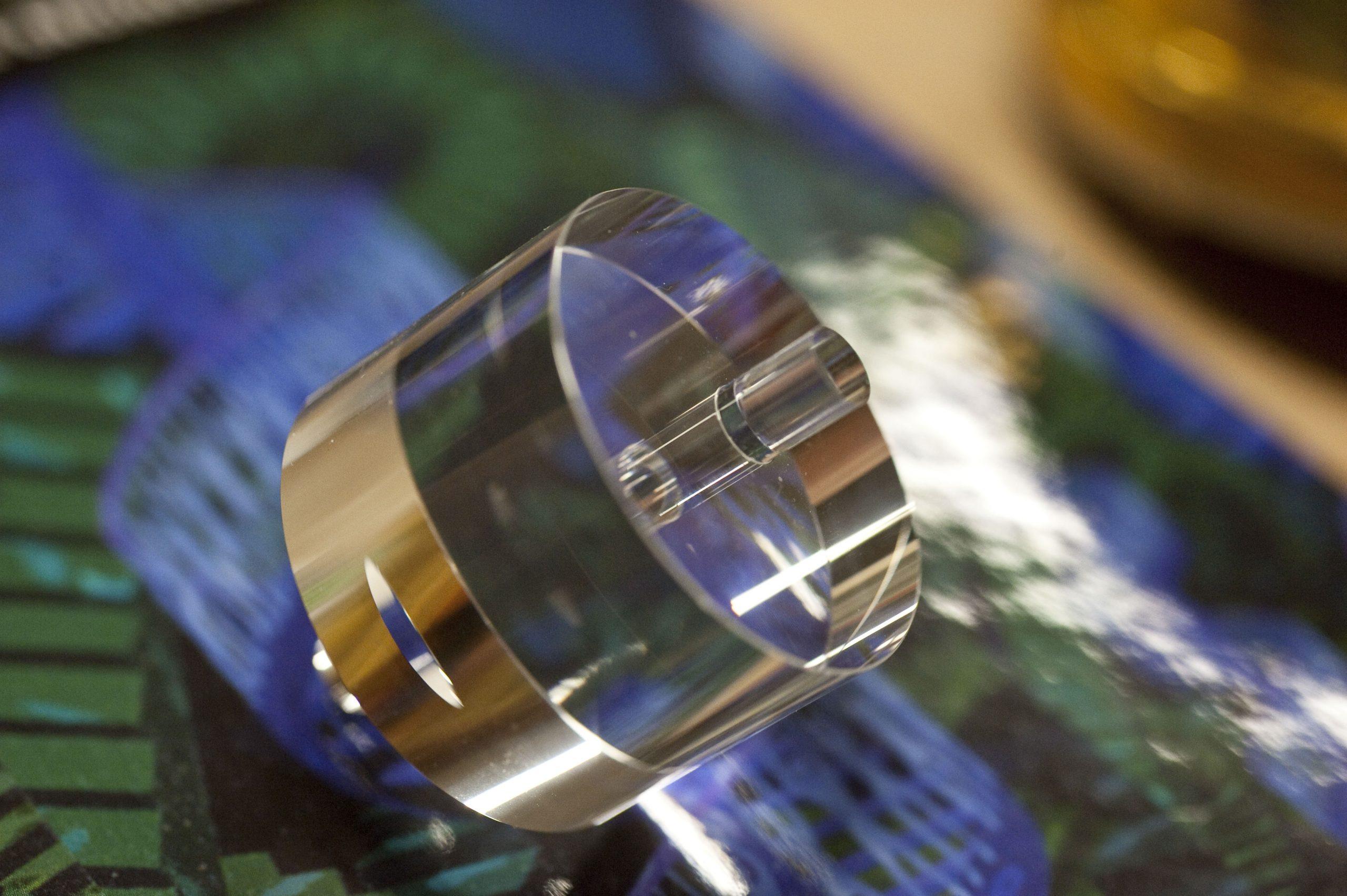
ULISS is built on a sapphire resonator cooled at a very low temperature. This technology allows to obtain a very high spectral purity and a short-term stability superior to that of many classical frequency references.
Cryocooler pulse-tube without liquid helium
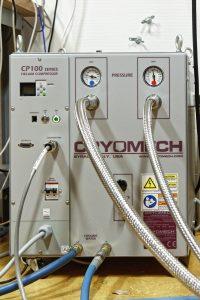
The system uses a closed-cycle cryogenic cooler. It eliminates the constraints related to liquid helium: no regular filling, less handling, better autonomy and an easier deployment on site.
Signal ultrastable autour de 10 GHz
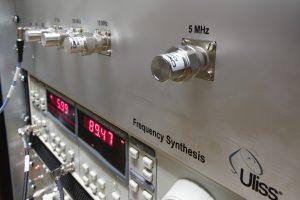
The oscillator is designed to operate at around 9.99 GHz, with a frequency synthesis making it possible to provide signals that can be used, in particular at 5 MHz, 100 MHz and 10 GHz according to the described architecture.
Better than 3 × 10⁻¹⁵ in 1 to 1000 seconds
The performances presented show a very high level of short-term frequency stability, with a cryogenic reference capable of meeting the most demanding needs in metrology, space and scientific instrumentation.
An ultrastable reference usable outside the laboratory
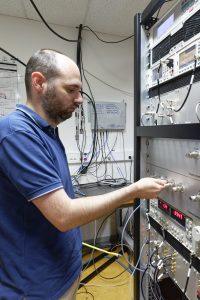
ULISS was designed to be transported by road and tested directly on the user's sites. This is a central point of the project: to move from a laboratory prototype to an instrument that can be used in real conditions.
Time-frequency, spatial, VLBI, industry, fundamental physics
ULISS is aimed at applications where frequency stability directly determines the quality of measurement: space navigation, atomic clocks, metrological certification, very long baseline interferometry, characterization of high-performance oscillators and fundamental physics experiments.
The ULISS project, which stands for Ultra-Low Instability Signal Source, meets a specific need: to have an extremely stable, reliable frequency reference that can be used in real conditions, beyond the laboratory environments with heavy cryogenic infrastructure.
Cryogenic sapphire oscillators offer remarkable performance in short-term stability. But the first generations were built on liquid helium cryostats, with significant constraints: regular supply, manual handling, specialized maintenance, difficulty of deployment on remote sites.
ULISS crosses that boundary by integrating a closed-cycle cryocooler of the pulse-tubetype, which removes the need for liquid helium. The heart of the system is based on a sapphire resonator in Whispering Gallery mode, stabilized around its thermal inversion point at about 6.1 K. This architecture allows to achieve a very high frequency stability while improving the autonomy, reliability and transport capacity of the instrument.
The project was designed to be tested with several potential users in Europe: metrology laboratories, observatories, industrial actors and scientific sites. The aim was not only to demonstrate its performance in a laboratory, but also to validate the use of an ultrastable cryogenic oscillator in concrete environments, with their own constraints.
ULISS is a continuation of the work carried out by the FEMTO-ST Institute on cryogenic oscillators, notably within the framework of a contract funded by the European Space Agency. It paves the way for wider use of this technology for synchronization, frequency stability measurement, space navigation, radio astronomy or fundamental physics.